

Legendary and Rare Traditional Banjar Cakes
Cingkarok Batu, also often spelled as Cengkarok, is one of the traditional cakes of the Banjar people that is well known in Pontianak, West Kalimantan.
This cake is part of the renowned Wadai 41, a collection of 41 traditional cakes that play an important role in various customary ceremonies and community activities of the Banjar people. Within the Wadai 41 arrangement, Cingkarok Batu holds the seventh position and is considered one of the cakes with deep cultural significance.
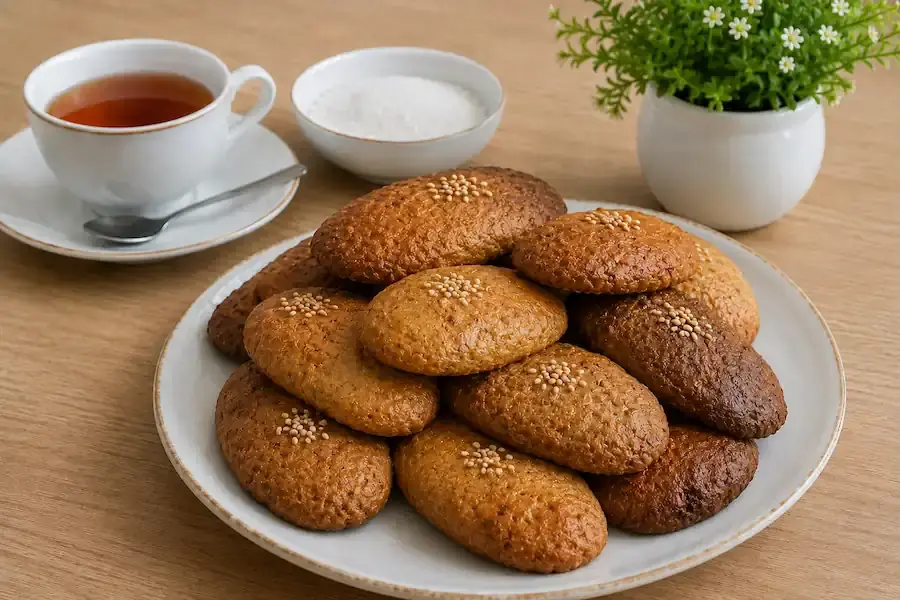
The name "Cingkarok Batu" is derived from two words. "Cingkarok" refers to a cake cooked until it reaches a texture similar to dodol, while "batu" (stone) describes its dense, firm, and harder texture compared to most other traditional cakes.
This distinctive characteristic makes it easily recognizable and sets it apart from other Banjar wadai.
Ingredients and Distinctive Characteristics of Cingkarok Batu
Cingkarok Batu is made from simple ingredients commonly found in traditional kitchens, including glutinous rice, grated coconut, palm sugar, salt, vanilla, and water. Some recipe variations also add granulated sugar or turmeric to create a brighter color.
The uniqueness of this cake lies in its preparation process. The glutinous rice and coconut are first roasted until fragrant, then ground before being cooked together with a palm sugar syrup.
The mixture is continuously stirred until it thickens into a dodol-like consistency before being poured into a tray and cut into pieces once cooled.
The final product is a yellowish-brown cake with the rich sweetness characteristic of palm sugar. Its texture is dense and chewy, even tending toward firmness, which perfectly matches the "stone" nickname attached to its name.
The Philosophy Behind Cingkarok Batu
Like many traditional foods of the Indonesian archipelago, Cingkarok Batu is more than just a culinary delicacy; it also carries symbolic meaning. Its dense and sturdy texture symbolizes determination, strength, and resilience in facing life's challenges.
The sticky glutinous rice represents strong family ties and brotherhood, while the sweetness of palm sugar symbolizes hopes for a life filled with blessings, prosperity, and happiness.
The yellow color resulting from the use of turmeric or palm sugar is also often associated with nobility, honor, and success.
Served at Traditional and Religious Events
Cingkarok Batu has a close connection to Banjar traditions. The cake is frequently served at thanksgiving ceremonies, communal feasts, weddings, circumcision celebrations, and religious events such as Baayun Maulid and Batamat Al-Qur'an.
In certain traditions, the presence of Cingkarok Batu is considered an essential part of the complete Wadai 41 assortment presented during customary rituals.
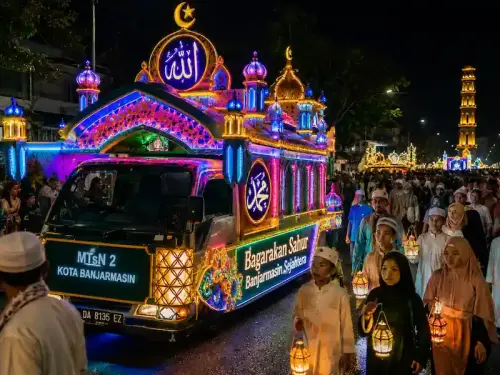
In addition, this cake can also be found as a daily traditional snack and is one of the popular takjil choices sold at Pasar Wadai during the month of Ramadan.
Variations of Cingkarok Batu
In general, Cingkarok Batu has two main variations. Cingkaruk Habang uses palm sugar, resulting in a yellowish-brown color and a richer flavor.
Meanwhile, Cingkaruk Putih uses granulated sugar, giving the cake a lighter or white appearance. Although the color and type of sugar differ, the basic ingredients and preparation process remain the same.
Why Is Cingkarok Batu Becoming Rare?
Today, Cingkarok Batu is among the traditional culinary treasures that are becoming increasingly difficult to find. Several factors have contributed to its decline. Changing consumer preferences have made modern cakes and snacks more popular than traditional treats.
On the other hand, the process of making Cingkarok Batu is relatively lengthy and requires patience and skill, from soaking the glutinous rice and roasting the ingredients to continuously stirring the mixture until it is fully cooked.
The availability of traditional ingredients such as high-quality palm sugar and fresh coconut is also becoming more limited. In addition, the number of artisans who master its traditional preparation techniques continues to decrease from one generation to the next.
The lack of promotion and documentation of traditional culinary heritage has further contributed to the decline in the popularity of Cingkarok Batu.
A Culinary Heritage Worth Preserving
Cingkarok Batu is more than just a traditional cake; it is part of the cultural identity of the Banjar people and Kalimantan as a whole. Behind its sweet flavor and distinctive texture lies a rich history, philosophy, and tradition that has been passed down through generations.
Preserving Cingkarok Batu means safeguarding one of Indonesia's valuable culinary heritages so that it is not lost to time.
By reintroducing this cake to younger generations and promoting it through various media channels, Cingkarok Batu has the opportunity to regain widespread recognition as one of Indonesia's unique and historically significant traditional culinary treasures.